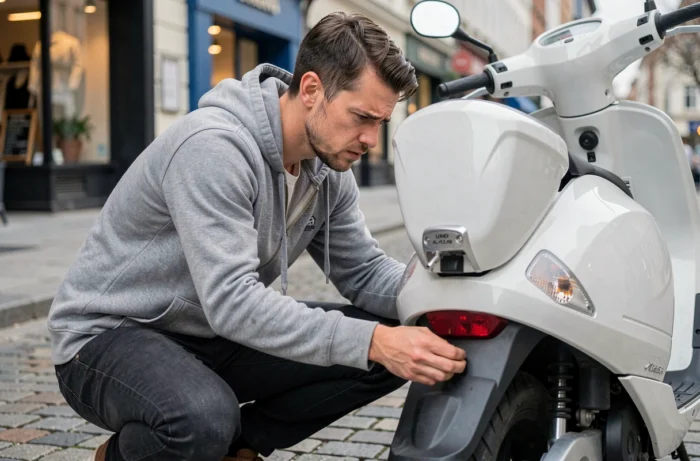
The scooter is parked, the helmet is on, but the storage compartment won’t open. A lost key, a lock seized after a damp winter, or a mechanism that no longer responds to the ignition switch: a stuck scooter storage compartment is a common problem. Before forcing anything, first identify what’s causing the jam, as the right way to open it depends on the cause.
Seat lock linked to the ignition switch or independent: check the mechanism before taking action
On a Peugeot Kisbee, the seat opens with a button or by turning the ignition key to a specific position. On a Peugeot Elyseo, the seat lock is a separate control on the side, where you insert the ignition key into a dedicated slot. Confusing the two systems could mean forcing the wrong part.
Before trying anything, check the model’s manual. Most are available online as PDFs. It shows the exact seat-opening mechanism, including the key position, lock location and connecting cable.
If the storage compartment won’t open even though the key turns normally, the problem is often with the cable connecting the lock to the seat latch. The cable may have stretched, become stuck or snapped. In that case, no lock-picking trick will help: you need to access the cable itself, sometimes by removing a side panel.
When trying to open a scooter storage compartment without a key, the distinction between a standard mechanical lock and one linked to the ignition switch completely changes the approach. A newer scooter with an electronic key or keyless system won’t respond to the same methods as a model with a simple barrel lock.
Stuck scooter storage compartment with no key: try these gentle methods first
Always start with solutions that won’t leave a mark. A mechanism seized by moisture or dust may sometimes free up with a little lubricant.
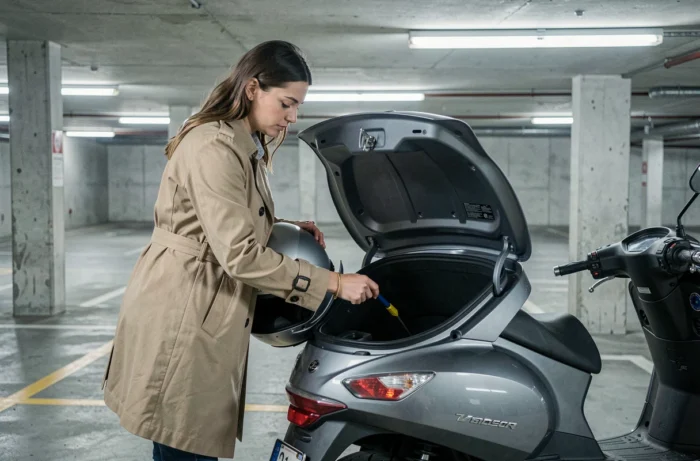
- Apply a penetrating lubricant (such as WD-40) to the lock cylinder, leave it for a few minutes, then gently try turning it with a spare key or by operating the ignition switch
- Check whether an item inside the compartment is preventing the seat latch from releasing by pressing firmly on the seat while operating the release
- On models where the release cable runs beneath an accessible panel, remove the side panel (usually held by a few Phillips screws) and pull the cable by hand to release the latch
Pressing down on the seat while operating the release is the method that works most often. The weight of an item in the compartment or a slight misalignment of the seat can be enough to jam the locking mechanism.
Emergency release cable on some models
Some scooters have emergency access to the seat-release cable, sometimes from the engine compartment or beneath the battery. The manufacturer’s manual will mention it if your model has one. It’s not a universal feature, but it’s worth checking before trying more invasive methods.
When to call a vehicle locksmith
If the gentle methods don’t work and the key is lost, what to do next depends on the type of lock. A professional can pick a standard mechanical lock without causing damage. A scooter with an electronic key or immobilizer requires specialized programming equipment, which only a vehicle locksmith or dealership will have.
Some service providers can cut and program a new key on-site, without towing the scooter. You’ll need to provide the vehicle registration document and proof of identity to establish ownership. This check is standard and entirely normal: it helps prevent theft.
Dealership or independent locksmith
Dealerships generally charge more and may require a wait for the key to be ordered. An independent locksmith specializing in motorcycles and scooters can often respond faster, but be sure to ask for a quote before they start work. Compare both options before making a decision to avoid an unpleasant surprise on the bill.
The cost depends on whether the scooter uses a basic mechanical key or a transponder key. On newer models with an immobilizer, reprogramming accounts for most of the cost.
How to prevent your scooter storage compartment from getting stuck again
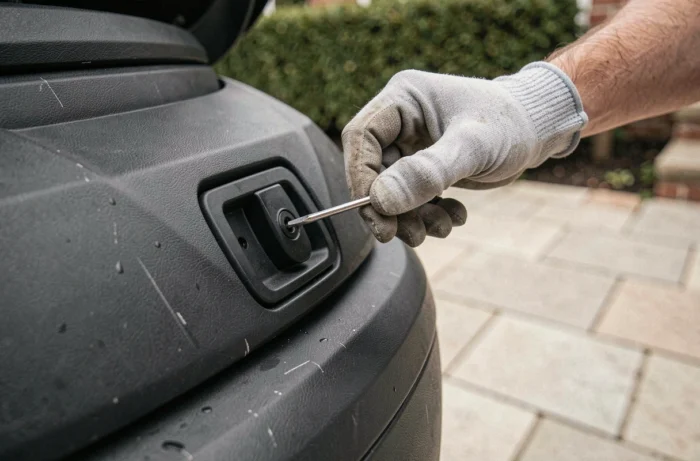
A lock cylinder exposed to the elements will eventually seize. Lubricating the seat lock once or twice a year with a dry lubricant (graphite or silicone) is enough to prevent most mechanical jams.
Getting a spare key as soon as you buy the scooter is the simplest precaution. For models with a transponder, the spare must be programmed by a professional, which costs considerably more than copying a standard key. It’s best to do this while you still have the original key, rather than in an emergency with no reference key.
Keeping the vehicle registration document (or a copy) somewhere accessible outside the storage compartment also prevents you from being unable to prove ownership when you need to most. A locksmith or dealership will refuse to help without this document.