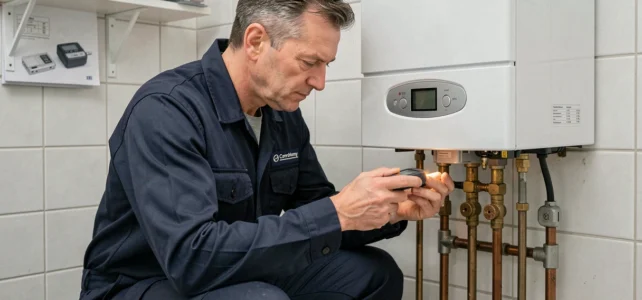
A radiator that whistles, a boiler that restarts poorly after summer, a gas bill that rises without explanation: these situations concern the majority of Brussels households. Heating represents the largest energy consumption in a home, and its maintenance is not limited to the annual visit from the heating technician. One must also know what to do themselves, when to call a professional, and how to follow rapidly evolving regional regulations.
Heating regulations in Brussels: what is changing and what you risk
Have you ever received a maintenance reminder without really knowing if it was mandatory or commercial? In Brussels, the periodic inspection of your boiler is a legal obligation linked to the EPC certificate. The frequency depends on the fuel type and the power of the installation.
Oil boilers follow an annual schedule.
The Brussels Region goes further: it has already banned the installation of new oil boilers and is moving towards planning “non-fossil gas” heating through a future Regional Heat and Cooling Plan, according to the European Commission (Build Up, July 2026).
In practical terms, if you are still heating with oil, the replacement of your boiler is approaching. It is better to anticipate than to suffer a regulatory deadline. The right reflex is to check the compliance of your installation during each periodic inspection and to keep the certificate issued by the certified technician.
Another little-known point: wood heating is not completely banned in Brussels. It is only prohibited during pollution peaks, unless it is the only means of heating the home. If you use a wood stove as a supplement, this nuance changes the game for maintenance and use.
Regular heating maintenance between technician visits
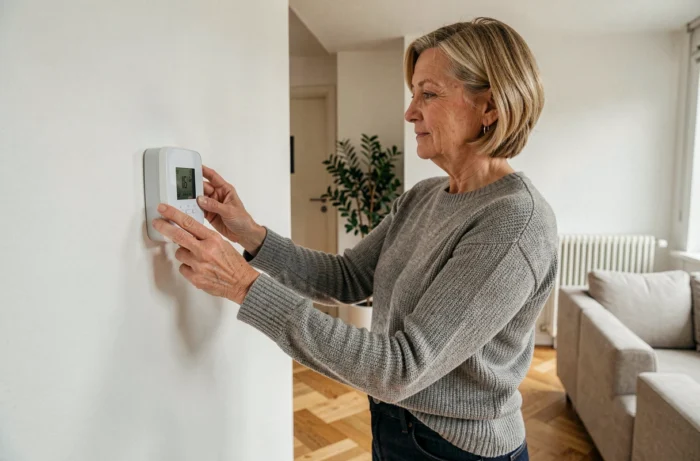
The maintenance of a heating system does not start on the day the heating technician rings the doorbell. Several simple actions, which can be done without specialized tools, allow you to maintain your heating in Brussels continuously and avoid breakdowns in the middle of winter.
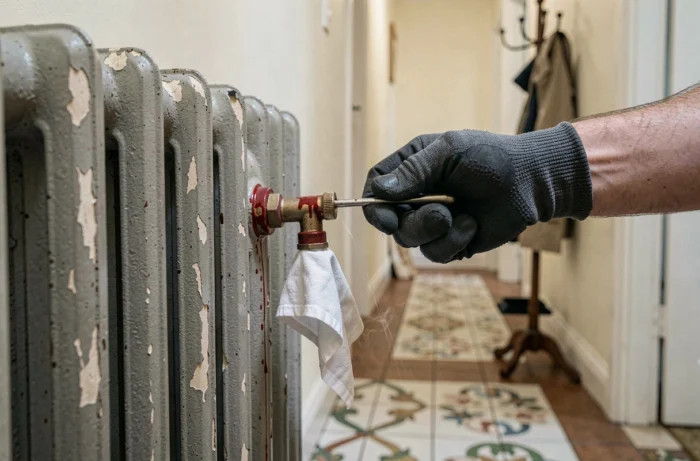
Bleed the radiators before each heating season
When a radiator is cold at the top and hot at the bottom, it contains air. Bleeding involves opening the small valve at the top of the radiator (the bleeder) with a wrench or flat screwdriver until water flows out steadily. Place a container underneath to catch the water.
Bleed your radiators once a year, before restarting. The system heats better, consumes less, and makes less noise.
Check the water pressure in the circuit
After bleeding, the circuit pressure may drop. Check the pressure gauge on your boiler: the pressure should generally be in the green zone indicated by the manufacturer. If it is too low, slowly open the filling valve until the correct level is reached, then close it.
Dust the radiators and thermostatic valves
Dust accumulated on and behind the radiators reduces their efficiency. A quick vacuum and a fine brush between the fins are enough. Take the opportunity to check that the thermostatic valves turn freely. After several months in a fixed position, they can sometimes get stuck. Turn them from one end to the other of their range to unstick them.
- Annual bleeding of radiators before the heating season, starting with those on the highest level of the home.
- Check the water pressure after each bleed, adjusting if the value drops below the minimum threshold.
- Dusting of radiators and boiler ventilation grilles at least twice a year, at the end and beginning of the heating period.
- Manipulating thermostatic valves off-season to prevent sticking, by moving them from the minimum position to the maximum position.
Certified heating technician in Brussels: who does what between owner and tenant
Are you a tenant and unsure if you are responsible for the maintenance costs? The distinction is simpler than it seems, but often misunderstood.
The tenant is responsible for routine maintenance: bleeding, dusting, minor adjustments. In case of a breakdown related to the aging of the installation, it is the owner who pays for the repair or replacement.
In practice, many leases stipulate that the tenant arranges the appointment with the heating technician, even if the cost is borne by the owner. Review your lease agreement to clarify this point before the cold season, not during it.
Set temperature and energy consumption: the important adjustments
A well-maintained but poorly adjusted home consumes as much as a poorly maintained one. The set temperature plays a direct role in the bill and in the perceived thermal comfort.
Have you ever noticed that a room heated to the same temperature can feel cold depending on the ambient humidity? Setting the thermostat between 19 and 20 °C in living areas remains the basic recommendation. Each additional degree significantly increases energy consumption.
Thermostatic valves allow you to adjust the temperature room by room. A bedroom can be kept a few degrees below the living room without losing comfort. This fine adjustment avoids unnecessarily heating rarely occupied spaces.
If your boiler has an outdoor temperature-based regulation mode (heating curve), have its settings checked during the periodic inspection. Poorly set heating curves waste energy without improving comfort.
- Program a reduced temperature at night and during prolonged absences, without going below the frost protection threshold.
- Close the thermostatic valves in unoccupied rooms rather than lowering the central thermostat, to maintain overall efficiency.
- Have the regulation of your boiler checked by the technician during the periodic maintenance, especially if the installation is over ten years old.
Brussels regulations will continue to evolve towards phasing out fossil fuels. Properly maintaining your current installation also gives you time to calmly plan the transition to a heat pump or another low-carbon system, without facing the urgency of a breakdown or a ban.