
Lightening your meals without falling into monotony requires understanding a few simple mechanisms related to satiety and ingredient choices. Everyday light and slim cooking is not just about counting the calories of each dish: it relies on food combinations that satisfy for a long time while keeping flavor on the plate.
Proteins and fibers at breakfast: a duo that fills you up for longer
A bowl of cereal or a slice of toast with jam mainly provides quick carbohydrates that are digested rapidly. Controlled trials published in 2024 show that a breakfast rich in proteins and fibers reduces snacking much more effectively than a morning meal that is simply low in calories but high in quick sugars.
A dairy breakfast enriched with proteins improves satiety and concentration until lunch, particularly in overweight women. The idea is not to eat more in the morning, but to eat better: cottage cheese with chia seeds and a few red fruits, or scrambled eggs accompanied by whole grain bread. This type of meal stabilizes blood sugar for several hours.
To extend this logic throughout the day, one can explore the slim recipes from Une Fille en Cuisine that offer dishes structured around this balance between proteins and vegetables.
Everyday light cooking: cooking methods that change the result
A chicken fillet can go from a bland diet dish to a tasty meal depending on the cooking method chosen. The caloric difference between a sauté in oil and an oven cooking with a drizzle of lemon juice is significant, but it is mainly the texture and concentration of flavors that vary.
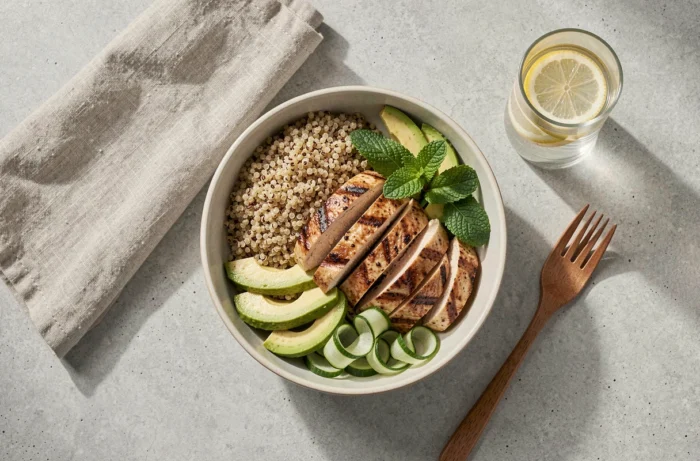
The oven remains the most reliable ally for light cooking. Vegetables (zucchini, tomatoes, eggplants) roasted at high temperature caramelize on the surface without added fat. This Maillard reaction adds flavor without extra calories. The papillote method, often forgotten, allows cooking white fish with fresh herbs while retaining moisture and aromas.
Steaming preserves the nutrients of vegetables better than boiling, which dissolves some of them in the cooking water. For meal salad recipes, a quick steam cooking of green beans or broccoli before cooling them in ice water gives them a crunch that long cooking destroys.
Seasonings that replace fat
Reducing fats does not mean eliminating flavor. Here are a few concrete ideas that work well in everyday cooking:
- Diluted white miso in a bit of water replaces a classic vinaigrette on a raw vegetable salad, with an umami depth that oil alone does not provide
- Plain Greek yogurt mixed with chives and a splash of lemon juice makes a dipping sauce for grilled chicken or roasted vegetables, with a fraction of the calories of a cream sauce
- Whole spices (cumin, coriander, smoked paprika) toasted dry for a few seconds before being added develop much more intense aromas than powdered versions stored for months
Quick slim recipes: three seasonal dishes in under thirty minutes
Time constraints are the primary obstacle to regular light cooking. Short preparations, with few ingredients, allow for sustainability without boredom.
Warm salad of grilled zucchini with chicken
Slice two zucchinis into ribbons with a peeler. Grill them under the oven for five minutes. Meanwhile, sauté sliced chicken fillet in a non-stick pan without fat. Assemble with halved cherry tomatoes, a few basil leaves, and a drizzle of olive oil (one teaspoon is enough). Less than twenty minutes of preparation for a complete dish that combines lean proteins and seasonal vegetables.
Fish papillote with summer vegetables
Place a fillet of cod (or hake) on a sheet of parchment paper. Add slices of tomatoes, strips of bell pepper, and a sprig of thyme. Close the papillote, bake at 180 °C for fifteen minutes. The fish cooks in its own juice, avoiding any added fat. Serve with brown rice or a portion of quinoa.
Express green vegetable soup
Steam broccoli and zucchini for ten minutes. Blend with a bit of vegetable broth and a spoonful of light cream cheese. This soup makes for an ideal light evening meal when appetite is moderate. You can vary it with spinach or peas depending on the season.
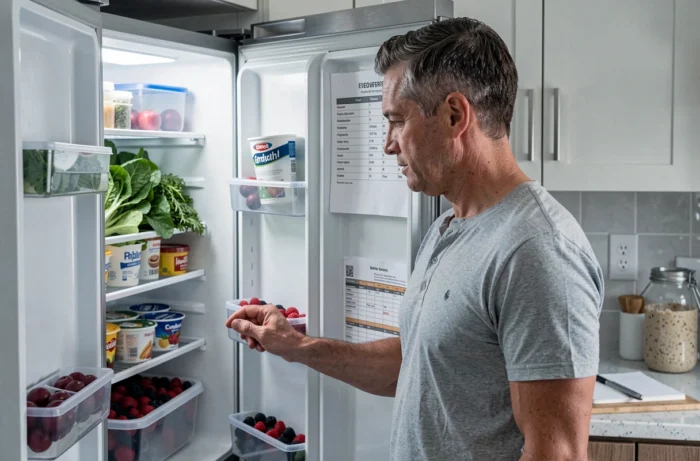
Revised Nutri-Score and light ingredient choices
A recent regulatory change deserves attention. The revision of the Nutri-Score algorithm, applied since early 2025, modifies the ranking of many products used in light recipes. The new algorithm penalizes products high in sugar and salt more heavily, and favors those richer in fibers or vegetables.
In practice, some products labeled “light” or “reduced fat” see their score drop because they compensate for the reduction in fat with an increase in sugar. Industrial “0% fat” salad dressings are a good example: their added sugar content sometimes places them in category C or D in the new rating.
This reinforces a simple approach: cooking for oneself with raw ingredients remains the most reliable way to control the nutritional quality of meals. A homemade dressing made from apple cider vinegar, mustard, and half a teaspoon of olive oil will always be better rated than an industrial vinaigrette, even if labeled as light.
The Nutri-Score alone does not change shopping habits, but its increasing presence on shelves pushes manufacturers to reformulate. For those who cook light daily, reading labels with the new rating in mind helps spot false friends among processed ingredients.
Maintaining a slim cooking style over time relies less on restriction and more on the repetition of simple actions: oven or papillote cooking, homemade seasonings, breakfast focused on proteins and fibers. The most sustainable recipes are those that take less than thirty minutes and use seasonal vegetables, because those are the ones you’ll make again the following week.