
Searching for a used car online often means spending hours scrolling through hundreds of listings without knowing where to start. The available stock on French platforms is colossal, and the search filters don’t always suffice to isolate the right vehicle at the right price. The difference between an effective search and a waste of time happens even before opening the first listings site.
Advanced search filters: the sorting that saves days
Have you ever noticed that two identical searches on two different platforms yield very different results? It’s not a matter of stock, but of the quality of the filters offered.
Most buyers use three criteria: brand, price, mileage. It’s a starting point, but it’s insufficient for quick results. The most effective platforms allow for the combination of fine filters: type of engine (gasoline, hybrid, electric), year of first registration, tax power, geographical location with a mileage radius.
Defining five non-negotiable criteria before starting the search drastically reduces the number of listings to examine. For example, if you’re looking for a Toyota Yaris hybrid under three years old with a capped budget, combining these parameters eliminates most of the noise. On clicauto.fr, this type of multi-criteria search allows you to directly target vehicles that meet a specific set of requirements, without sifting through pages of irrelevant listings.
A filter often overlooked: the publication date of the listing. Listings less than 48 hours old attract less competition. Setting up email alerts based on your exact criteria puts you at the front of the line when a matching vehicle hits the market.
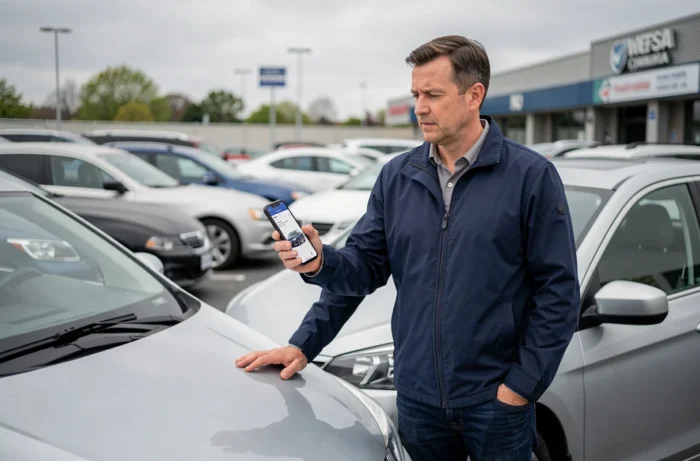
Checking a used vehicle remotely: the checks that protect the buyer
Finding quickly doesn’t mean buying blindly. Online or remote purchases expose you to specific risks that traditional guides often underestimate.
Mileage fraud
The odometer remains one of the most manipulated points in the used car market. A vehicle advertised with low mileage may have actually traveled much more. Before any travel or commitment, always request the digitized maintenance log and cross-check it with the history of technical inspections.
A vehicle history report is the best insurance against fraud. Several online services (HistoVec, managed by the state, or private providers) allow you to check the number of owners, reported accidents, and the consistency of the mileage with the technical inspection records.
Gray card scam
An increasing scam targets remote buyers: the seller sends a copy of a falsified gray card or one corresponding to another vehicle. Verify that the VIN (engraved on the chassis and visible through the windshield) matches exactly with the one indicated on the registration certificate.
- Request a photo of the VIN visible on the vehicle, not just on the documents.
- Compare this number with that of the history report and the technical inspection.
- Refuse any transaction if the seller hesitates to provide these elements; it’s an immediate warning signal.
Prices of used cars online: why the market currently favors the buyer
The market context has changed. Prices of used vehicles have dropped to their lowest levels in several years. This trend particularly affects electric models, whose depreciation accelerates as the supply of recent vehicles increases in the secondary market.
Used electric vehicles have become significantly more accessible than they were two years ago. If your daily commutes allow it, expanding your search to this segment can reveal interesting offers on models you wouldn’t have considered at the price of new.
For gasoline and hybrid engines, the drop is less pronounced but real, especially for models from mainstream brands like Volkswagen or Toyota. Compare the listed prices with the reference values available online to assess whether a listing is properly positioned or overvalued.

Omnichannel buying journey: buying without unnecessary travel
Articles listing platforms overlook a major evolution: the share of used purchases made in omnichannel mode is growing much faster than the overall market. This means that an increasing number of buyers are combining online research, phone exchanges with the seller, remote document verification, and vehicle delivery.
This journey is no longer reserved for professionals. Many private sellers now agree to send detailed videos of the vehicle, conduct a video call to show the condition of the bodywork and interior, or arrange for a technical inspection at a nearby center at the buyer’s request.
- Request a continuous video (not selected photos) showing the exterior, interior, and cold start.
- Have a recent technical inspection done if the one presented is over three months old.
- Prefer secure payment (bank transfer after document verification, or escrow) rather than cash payment upon key handover.
- Require receipt of the original crossed-out gray card before or at the time of delivery.
Online auctions also represent a channel to explore. In the professional segment, the majority of auction amounts now go through online platforms, with increased transparency regarding the condition of vehicles. Some of these platforms are gradually opening up to individuals.
Finding the right used car online relies less on the chosen platform than on the applied method. Precise search criteria, rigorous document verification, and a structured buying journey reduce search time and the risk of unpleasant surprises. The current market, with its falling prices and accessible verification tools, makes the process more favorable to buyers than it has been for a long time.